Case Study
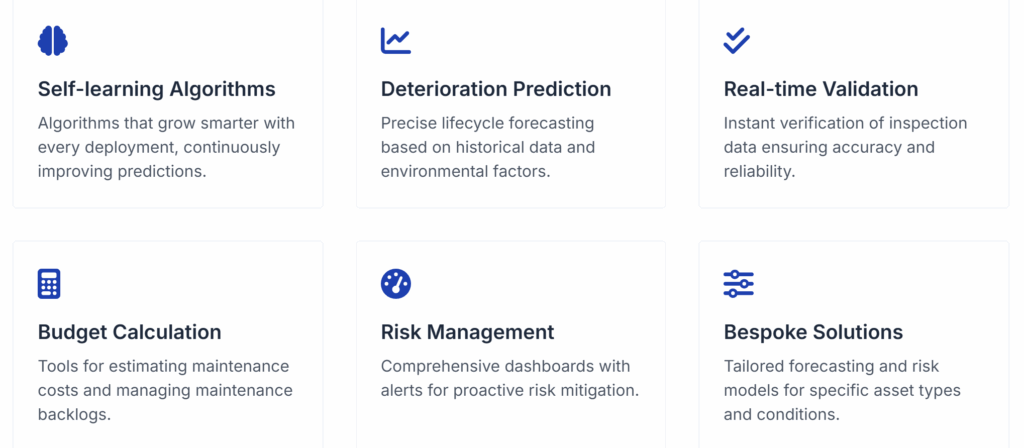
TREMS Hub is proud to have launched the “CAMS Central Asset Management System” a piece of software for the purposes of tracking and managing facilities assets and maintenance. 2025 saw the creation of a business development role, transitioning the software from research trials to commercial market.
During the engagement events held prior to development of the TREMS research program, three areas of need were identified by industry:
(a) the accurate capture of waste material flows and associated costs to enable addressing barriers to waste minimisation
(b) the need for a solutions inventory to capture products and co-products developed from waste
(b) capturing the recycling potential of asset components of buildings.
From this, three sub-projects were developed as part of “Smart technologies for waste management”. One of which includes the CAMS (Central Asset Management System) an asset management platform for tracking building maintenance. Which allows for the data capture sought in subprojects a) and c) above. The software has been trialed with multiple organisations and 4,000 pieces of infrastructure.
Developed in partnership with industry collaborator Macdonald Consultancy. Who is a specialist in facilities management and risk mitigation. The project was included in TREMS following research completed prior to the Hub creation. However, it was participation in the Hub that allowed the system to fully stand alone as an enterprise that now has a dedicated business development manager taking the product to market.
Through the hub the software is progressing from complex building and facility maintenance schedules to measurements of sustainability and efficiency. Current developments include an energy retrofitting module for buildings, automated inspections through image recognition as part of the CSIRO NextGen Program, and integration of Building Information Modelling (BIM) into infrastructure management.
You can read more about the project on the RMIT website here.
